
Description
Static electricity can build up in hydrocarbon fuels when they are pumped at high flow rates, particularly through line strainers and m kgicronic filters. Hydrocarbon fuels inherently have a very low conductivity, which means that they retain static electricity, and so any static charge generated in the fuel will not dissipate quickly. This can lead to a static electricity discharge, with the associated risk of an explosion. It is quite common practice, however, to blend anti-static additives into the fuel, to improve the conductivity and reduce the risk of a static discharge occurring.
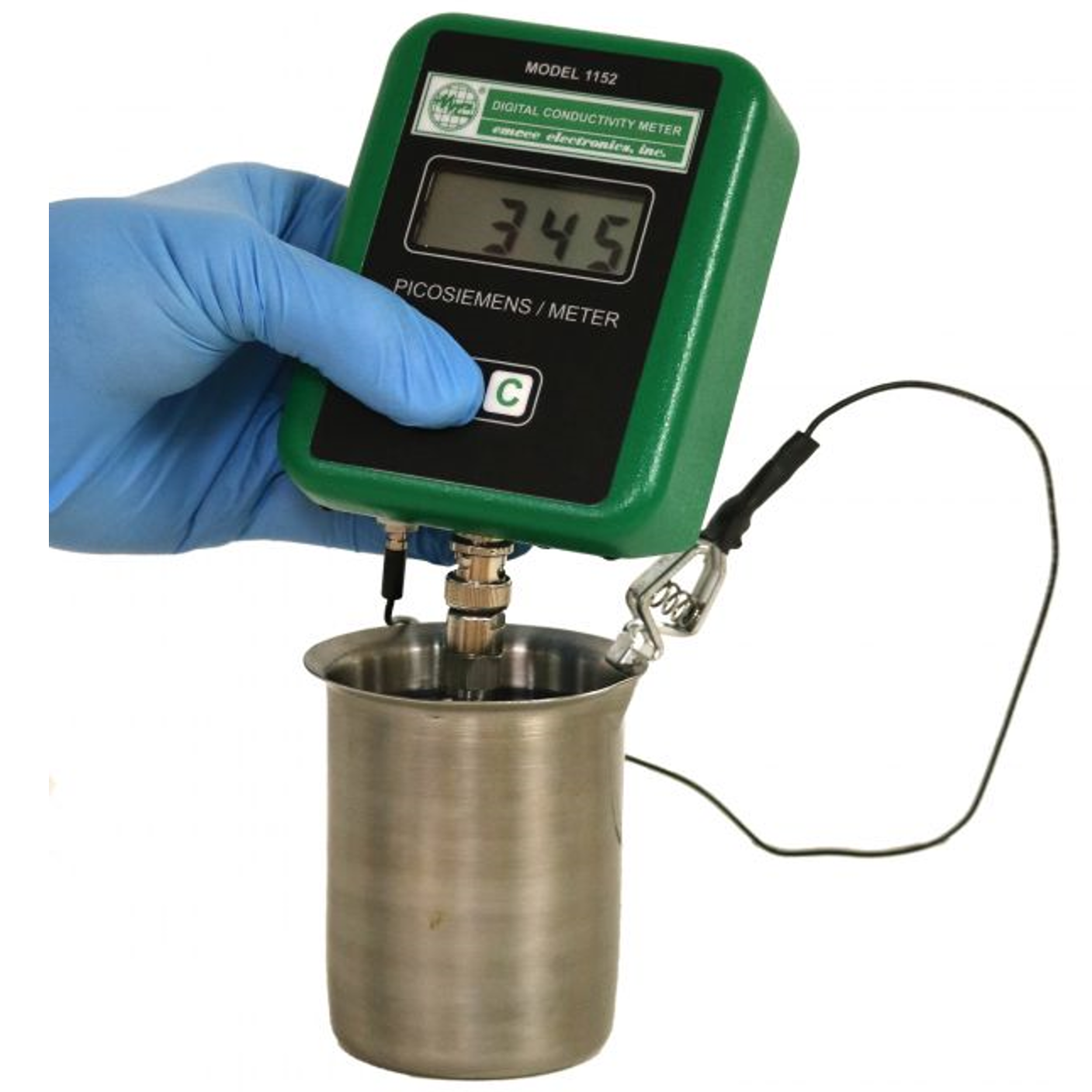
This portable, digital conductivity meter consists of an electronics assembly and a detachable stainless steel probe. The probe, which is similar to a capacitor having concentric electrodes, is immersed into the fuel sample, up to the set of holes closet to the electronics assembly. Depressing the ‘M’ push button causes a relatively small direct current to flow through the fluid between the electrodes. The current is amplified in the electronics assembly and is displayed on the liquid crystal display in picosiemens per meter (pS/m), as defined in ASTM D2624.
Key Features
- Rugged, cast aluminium housing
- Large digital display
- Range: 0-1999 pS/m (in increments of 1 pS/m)
- ASTM Standard Test Method D2624 (included in Specifications: D975, D1655 & D7566)
- Self-check calibration
- Detachable, stainless steel probe
- Certified intrinsically safe for use in Zone 1 EEx, in accordance with HA T4 hazardous areas
- Rigid, moulded plastic, solvent-resistant carry case (included)
- Weight: 0.9 kg